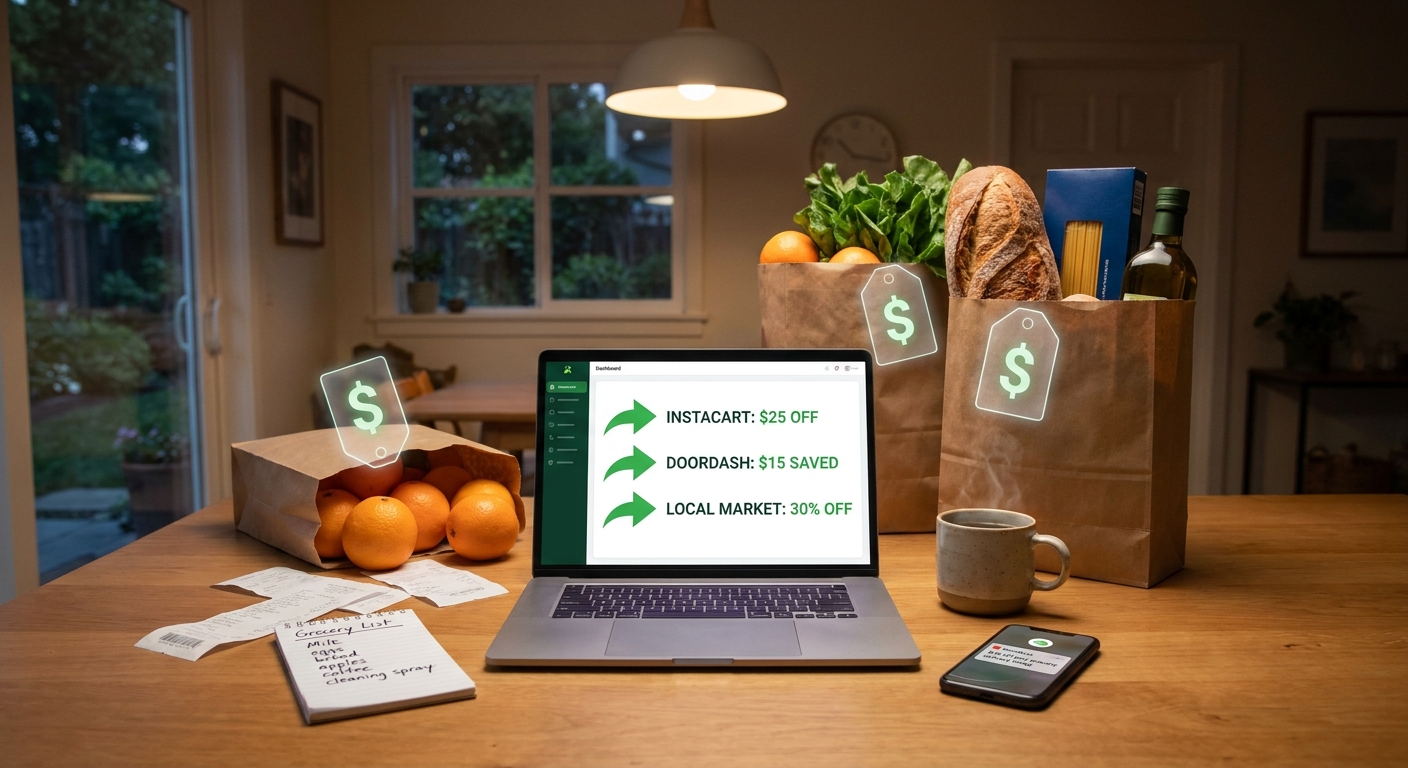
Nothing is more annoying than seeing a “verified” grocery code, pasting it in, and getting that dead little message: not valid for this account. If you have been hunting for grocery delivery promo codes today, you already know the game. One site shows a big discount, another repeats the same code, and by the time you check out, it is expired, region locked, or only meant for brand-new users. Meanwhile, eggs, paper towels, produce and pet food are not getting any cheaper.
The good news is that there are still real savings out there if you know where to look first. The best grocery promos right now usually fall into three buckets: new customer offers on Instacart and DoorDash grocery, partner-specific deals tied to stores like Costco or CVS, and supermarket app sign-up bonuses that stack with loyalty pricing. The trick is not finding the most dramatic coupon headline. It is finding the one that actually works for your order, in your area, today.
⚡ In a Hurry? Key Takeaways
- Best bets today are usually first-order Instacart deals, DoorDash partner grocery promos, and local supermarket app sign-up rewards.
- Check the fine print before you shop. Most “great” codes fail because they are new-user only, store-specific, or require a minimum spend.
- Never build your whole cart around a coupon until it applies at checkout. Add essentials first, then test the code before you place the order.
What actually counts as a real grocery promo today?
For most shoppers, a real deal is simple. It saves money on food or household basics without forcing you to buy junk you did not need.
That means the best grocery delivery promo codes today usually look like one of these:
- Money off your first order, like $10 to $30 off a minimum purchase
- Free delivery for new users or for a limited campaign
- Store-specific promos, such as savings on Costco, CVS, Walgreens, Aldi, or local chains
- Membership trial perks, where delivery fees are waived for a short period
- App sign-up or loyalty rewards from supermarkets themselves
The catch is that many of these are narrow by design. A code may be valid only for one retailer, one ZIP code, one account type, or one payment method.
Instacart promo codes. Where the good deals usually are
Best use case
Instacart is often strongest for first-time customers, lapsed customers, or households willing to use a second account in a legitimate way for another family member. If you already have an active account and order often, your savings may come more from in-app offers than from public promo codes.
What to expect
The most common Instacart promotions tend to be:
- First order discounts with a minimum spend
- Free delivery on your first order or first few orders
- Percent-off promotions for selected stores
- Short-term coupons sent by email or pushed in the app
If a public code does not work, that does not always mean it is fake. It may be tied to a new account only. Or your store may be excluded. Costco orders, for example, can have different rules than a standard supermarket cart.
Best strategy on Instacart
Open the app first and check the store banners before searching the wider web. Instacart often puts the live deal right in front of you, but shoppers miss it because they go straight to coupon sites.
Also, watch the minimum spend. If the code starts at $75, loading a $68 cart and then adding random snacks to hit the threshold usually eats up the savings.
DoorDash Grocery promo codes. Better than people think
Best use case
DoorDash grocery deals are worth checking if you already use the app for restaurants and have DashPass, or if a specific partner store is running a promo. This is where many of the “looks real but does not work” problems show up, because DoorDash offers can be tied to certain merchants.
What to expect
The better DoorDash grocery offers usually include:
- Discounts on first grocery or convenience orders
- DashPass free delivery or lower service fees
- Promos tied to CVS, Walgreens, Costco, BJ’s, or local grocers
- Retailer-sponsored offers that appear only inside the app
This is the fine print that matters most. A “grocery” promo may not cover every grocery store on DoorDash. It may only apply to one chain, or only to convenience-category items.
Partner-specific catches to watch
Costco offers may require a certain basket size. CVS and Walgreens deals may exclude some household, health, or sale items. Some promos work only for pickup. Others need DashPass. This is why the code can be “real” and still fail for your exact order.
If you are ordering from one of these partner stores, check the store page inside DoorDash before trying any public code. The app often tells you more than the coupon site does.
Local supermarket promos can be the sleeper hit
Do not ignore your local grocery chain’s own app. A lot of shoppers do, and that is a mistake.
Regional supermarkets often beat the big delivery apps in one of three ways:
- First-order pickup or delivery discounts
- Digital coupons tied to your loyalty account
- Weekly rewards on essentials, not just trendy add-ons
If your local store has its own delivery service, or fulfills through Instacart or DoorDash, compare both checkout paths. Sometimes the store app gives you loyalty pricing plus a sign-up reward. The marketplace app may have easier delivery, but higher item prices.
This is the same kind of coupon mess people run into in other categories too. If you have ever tried sorting through hardware deals, you will recognize the pattern in Today’s Best Home Depot Promo Codes: Real, Verified Deals On 30% Off Power Tools And Big‑Ticket Home Upgrades. The offer may be real. The hard part is figuring out where it applies and what knocks it out.
How to tell if a grocery code is likely to work before checkout
1. Check whether it is for new users only
This is the number one reason codes fail. If the deal sounds unusually generous, assume it is aimed at first-time orders unless clearly stated otherwise.
2. Look for a store name in the fine print
If a code mentions Costco, CVS, Aldi, or another retailer, take that literally. It may not work outside that one partner.
3. Confirm the minimum order amount
Minimums are often calculated before taxes and fees, and sometimes after certain discounts. A cart that looks close may still miss the threshold.
4. Watch for account targeting
Some promos are tied to email campaigns or selected accounts. If you saw the code in a social post but not in your app or inbox, your account may not qualify.
5. Test before you commit to the cart
Do not spend 30 minutes building a giant order and then hope. Put in a few basics, try the code, and see if it triggers. Then finish shopping.
How to stack savings without getting too fancy
You do not need to be a points obsessive to do this well. A simple stacking plan works for most households.
Good stack example
- Store loyalty price on sale items
- Supermarket digital coupon clipped in the app
- New user or partner-specific delivery promo
- Cash back card or bank offer, if available
Bad stack example
- Trying five public codes that all cancel each other out
- Padding the cart with impulse items just to hit a threshold
- Paying higher marked-up item prices that erase the discount
The smartest move is to compare the final total, not the advertised discount. A flashy $20 off code can still lose to a store app order with better item pricing and loyalty deals.
Red flags that waste your time
If you are searching grocery delivery promo codes today, these are the signs to slow down:
- A coupon site listing dozens of codes with no date context
- Claims like “works for everyone” on a delivery app promo
- No mention of minimum spend, account eligibility, or store restrictions
- Comments saying “worked last month” but nothing recent
- Codes copied across multiple sites word for word
That does not mean every code is fake. It usually means the site is not doing much real checking.
Best practical playbook for saving on groceries this week
If you want the shortest route to actual savings, do this:
- Pick your store first, not your coupon first.
- Check the grocery app or supermarket app for live banners and in-app offers.
- Build an essentials-only cart.
- Apply the code before adding extras.
- Compare with pickup if delivery fees are killing the deal.
- Use loyalty rewards if your local store offers them.
That method is less exciting than coupon hunting across six tabs, but it is usually the one that saves real money.
At a Glance: Comparison
| Feature/Aspect | Details | Verdict |
|---|---|---|
| Instacart promos | Usually strongest for first orders, lapsed users, and store-specific campaigns. Minimum spend often applies. | Best for new customers or larger planned shops. |
| DoorDash grocery deals | Good when tied to partners like Costco, CVS, Walgreens, or DashPass perks. Restrictions are common. | Best if you already use DoorDash and can match the right store. |
| Local supermarket apps | Often include loyalty pricing, digital coupons, sign-up rewards, and better pricing on staples. | Best overall value for repeat shoppers who want fewer surprises. |
Conclusion
Food and household prices are bruising everyone right now, and grocery is where people feel it first. One working code on a $75 to $150 order can make a real difference, especially when it helps cover basics instead of tempting you into extras you did not need. The smart approach is to focus on deals that are live now, understand whether they are new-user only, see if they are tied to partners like Costco or CVS on DoorDash, and check whether your local supermarket’s sign-up bonus or loyalty pricing quietly beats the big app headline. You do not need to become a coupon detective. You just need a better filter. Start with the app, check the store, read the limits, and compare the final total. That is how you turn grocery delivery promo codes today into actual savings, not just another dead code and a wasted half hour.