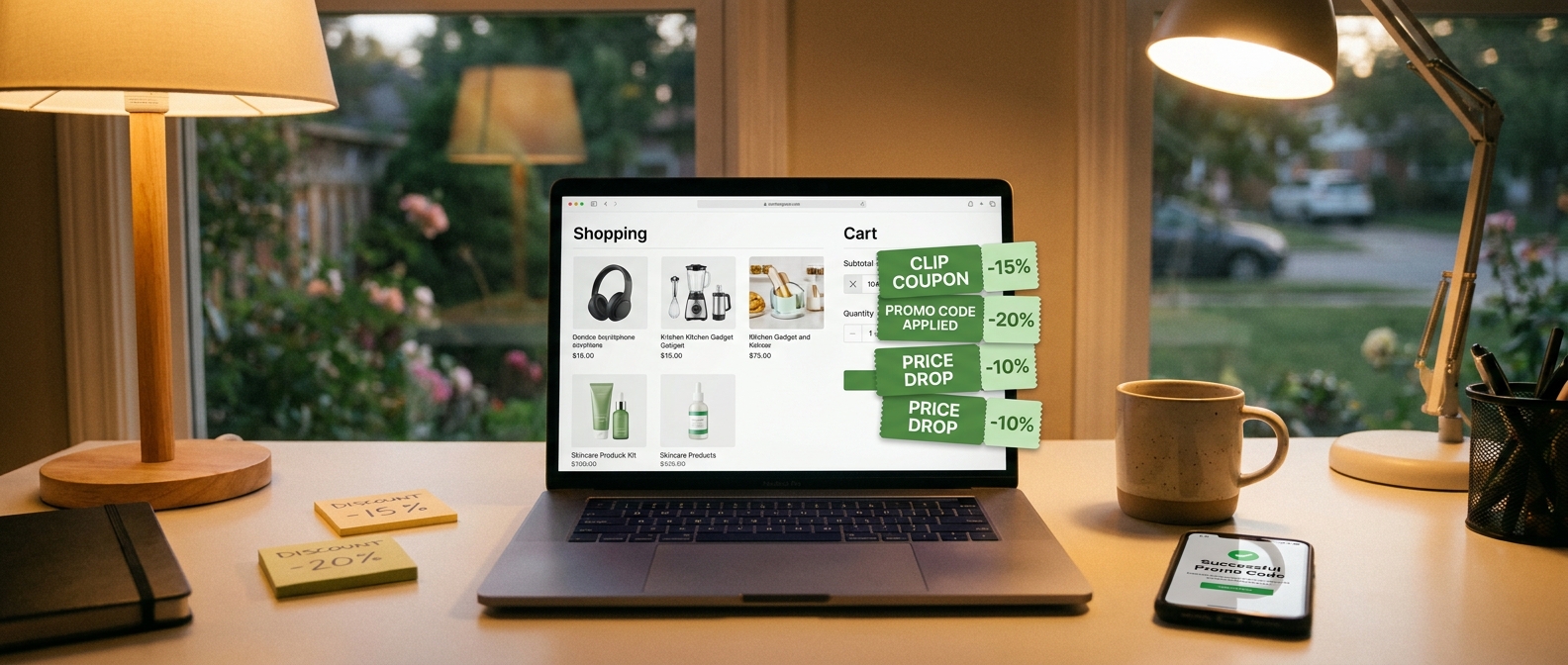
Amazon checkout can feel weirdly stressful for something that is supposed to be quick. You see a lightning deal badge, then a little “clip coupon” box, then a promo code from a random page, and somehow none of them seem to explain whether they work together. That is where most shoppers lose money. They either rush through checkout or grab the first code that works and stop there. The good news is that the best amazon promo codes today are not just about finding one discount. They are about knowing the order to apply them and which items belong in the same cart. Right now, Amazon has one of those rare overlap periods where June promo codes, on-page coupons, subscribe and save offers, and category markdowns are all showing up at once. If you shop carefully, one ordinary cart can turn into three stacked deals and cut much more off your total than most people expect.
⚡ In a Hurry? Key Takeaways
- The best amazon promo codes today usually work best when combined with clipped coupons, category sales, and Subscribe & Save discounts.
- Split your order by item type. Essentials, gifts, and big-ticket products often trigger different discounts, so one big mixed cart can cost you more.
- Always check the final checkout screen. Some promo codes only apply to items sold by Amazon or specific sellers, and some deals disappear if inventory changes.
Why most Amazon shoppers accidentally miss the biggest discount
The biggest mistake is treating every deal like it works the same way. It does not.
Amazon has at least four common discount types running at once. There are promo codes you enter manually. There are clickable coupons on the product page. There are automatic sale prices. And there are cart-based offers like “buy $50, save $15” or “save 20 percent when you buy 3.”
If you toss everything into one basket and hope the site sorts it out, you can easily block a better discount. A beauty item with a clip coupon may stack nicely with a category sale. A household item may do better in Subscribe & Save. A premium gadget may need its own cart because the promo only works on that brand.
So yes, the cart matters. Not just the code.
What “stacking” really means on Amazon
Stacking is simply combining discounts that come from different parts of the store.
A stacked deal often looks like this
You start with an item already marked down in a sale. Then you clip the on-page coupon. Then, if the product qualifies, you add a promo code at checkout. In some categories, you might also get a Subscribe & Save discount or a multi-buy offer.
That is how a simple 10 percent discount turns into something much better.
What usually stacks
These combinations often work:
- Sale price plus clipped coupon
- Sale price plus promo code
- Clipped coupon plus promo code
- Sale price plus Subscribe & Save
- Multi-buy category discount plus clipped coupon on qualifying items
What usually does not stack cleanly
- Two manual promo codes on the same item
- Some brand-specific codes with lightning deals
- Some third-party seller coupons with Amazon-run category events
The final checkout page tells the truth. The product page is only the sales pitch.
How to turn one cart into three smarter carts
This is the part that saves real money.
Cart 1: Essentials and refill items
Put household basics here. Think paper products, vitamins, cleaning supplies, pet food, and pantry staples.
These items often qualify for:
- Subscribe & Save discounts
- Extra percentage-off coupons
- Buy-more-save-more offers
Before checkout, compare the one-time purchase price against Subscribe & Save. Sometimes the subscription version is cheaper even if you cancel later after the first shipment. Just be sure you actually want that first order.
Cart 2: Gifts, beauty, and personal items
This group often has the best clipped coupons. Amazon loves little on-page boxes like “save 25 percent” or “apply $10 coupon.”
These products can also get category-wide event pricing, especially in beauty, personal care, and small home goods.
If you mix these with unrelated items, the math gets muddy fast. Keep them together so you can clearly see whether the coupon and category sale are both showing up.
Cart 3: Big-ticket products and name-brand gear
This is where shoppers get lazy because the item already looks discounted. Do not stop there.
For headphones, kitchen machines, monitors, robot vacuums, or higher-end home gadgets, look for:
- A product-page coupon
- A brand promo code on the listing
- A limited-time category markdown
- A lower price from the official brand storefront
Large purchases deserve their own checkout. One misplaced filler item can stop a brand promotion from applying or make it harder to see the true discount.
How to check if the best amazon promo codes today are actually real
Not every code floating around online is current. Some expired yesterday. Some only work for select accounts. Some were never public in the first place.
Use this quick reality check
- Check whether the code appears on the Amazon product page itself
- Read the tiny text under the coupon or promo section
- Look for seller restrictions like “sold by Brand X and shipped by Amazon”
- Test the code at checkout before you commit
- Watch the discount line in the payment summary, not just the cart page
If the item is in a lightning deal, move fast, but do not panic. A lightning deal is only a good deal if the coupon still applies after the item is in your cart.
A simple daily game plan that works
If you want the best amazon promo codes today without turning shopping into a part-time job, keep it simple.
Step 1: Start with the item, not the code
Search for the thing you actually need. Then open 2 or 3 versions of it from reputable sellers.
Step 2: Look for the coupon box under the price
If there is a box to clip, do that first. It is the easiest money on the page.
Step 3: Check whether the item belongs in a special cart
If it is a refill item, test Subscribe & Save. If it is a beauty or gift item, see whether there is a category sale. If it is expensive, isolate it.
Step 4: Enter promo codes last
Promo codes usually come into play near checkout. Add them after your cart is organized so you can see what they changed.
Step 5: Compare the total, not the sticker price
This is the step people skip. A product with a smaller visible discount can end up much cheaper after the coupon and code are applied.
Where stacking tends to work best right now
June is often strong for practical shopping. Not glamorous, but useful.
The best overlap periods usually show up in:
- Household essentials
- Summer outdoor gear
- Beauty and skincare
- Back-to-school basics starting early
- Kitchen appliances and home upgrades
That matters because prices are climbing almost everywhere else. If you are buying sunscreen, vitamins, batteries, paper goods, dorm items, or a gift for a summer event, this is exactly the kind of month where stacking can make a noticeable dent in the bill.
Common mistakes that kill your discount
Mixing sold-by-Amazon and third-party items without checking terms
Some discounts only work when the item is sold by Amazon or by one approved seller.
Forgetting to clip the coupon first
It sounds obvious, but people miss this all the time. If the box is not checked, the discount does not exist.
Assuming a promo code applies to every color or size
It often does not. The blue one may be discounted. The black one may not.
Waiting too long with lightning deals
Inventory shifts fast. If the item leaves the deal window, your stack can collapse.
Not splitting the cart
This is the big one. One giant cart feels efficient, but it often hides better combinations.
At a Glance: Comparison
| Feature/Aspect | Details | Verdict |
|---|---|---|
| Single mixed cart | Easy and fast, but it can hide category offers, block item-specific promos, and make stacked discounts harder to spot. | Convenient, but usually not the cheapest option. |
| Split-cart strategy | Separates essentials, coupon-heavy items, and big-ticket gear so each order can trigger the best available deal type. | Best for maximizing savings today. |
| Promo code reliability | Amazon-listed coupons and on-page promos are usually more dependable than random codes found elsewhere. | Trust checkout totals, not internet hype. |
Conclusion
If Amazon shopping has felt messy lately, you are not imagining it. There really is a strange mix of promo codes, clipped coupons, and sale prices all running at once. But that chaos can work in your favor if you stop treating checkout like a one-click sprint. Right now Amazon has a rare mix of aggressive June promo codes, in-cart coupons and category sales running at the same time, which means the difference between a lazy checkout and a smart, stacked one can literally double your savings in a single order. A focused daily guide to the best amazon promo codes today, plus a simple split-cart habit, can help you stretch your budget on essentials, gifts, and bigger purchases without feeling like you need a spreadsheet to do it.